
A customer ordered 14 variants of 40 aerospace brackets, totaling 6,800 units over six months, requiring AS9100 documentation and full batch traceability. Injection mold tooling would cost approximately $180,000, for 14 molds, and take 5 months. The order was ultimately delivered on time using DMLS Ti-6Al-4V, with three certified additive suppliers working in parallel, achieving a landed cost per piece 34% lower than equivalent machined alternatives. This is not a story about additive prototypes, but about mass production.
This is the true definition of mass production in additive manufacturing: not just a prettier prototype, but a process that is documented, validated, traceable, and capable of consistently producing end-use parts. Design, materials, and documentation must cross this line together.
What "Mass Production" Really Means Here
Most teams underestimate the volume of documentation when transitioning from prototype to mass production. Prototypes are about whether a single part looks correct; mass production parts are about whether the 500th piece still meets specifications, whether records can prove it, and whether this evidence will stand up to customer or regulatory audits a year from now.
At this level of industrial additive manufacturing, the focus is not on the machine itself, but on a controlled system: validated print parameters, controlled raw materials, trained operators, calibrated inspection, and a documentation chain that links each part back to a specific batch, machine, operator, and powder lot number.
Prototypes vs. Mass Production: What Really Changes
The geometry might be identical, but the surrounding manufacturing system is completely different. The focus shifts from "making an acceptable part" to "managing a process that can statistically make many parts."
| Aspect | Prototype Mindset | Mass Production Mindset |
|---|---|---|
| Batch Size | 1 to 5 pieces | 100 to 10,000 pieces per release |
| Documentation | Print file, optional | Material certificates, process records, first article inspection, CoC required |
| Batch Traceability | Little record | Powder lot number, machine, operator, date, batch number |
| Certification | None or informal | Based on ISO 9001, plus AS9100 or ISO 13485 depending on industry |
| Acceptance | Single sample passes | Sampling plan across batches |
| Change Management | Ad-hoc handling | ECN with re-validation conditions |
Mass Production Process Options
Each industrial additive manufacturing process has different sweet spots in terms of throughput, material performance, and per-piece cost. Choosing a process is an economic and application-driven decision, not a brand choice.
| Process | Typical Materials | Practical Batch Size Range | Sweet Spot in Mass Production |
|---|---|---|---|
| MJF (Multi Jet Fusion) | PA12, PA11, TPU | 500 to 20,000 pieces | Functional plastic parts, brackets, housings, air ducts |
| SLS | PA12, glass-filled nylon | 100 to 10,000 pieces | Durable nylon parts, complex internal geometries |
| DMLS / LPBF | AlSi10Mg, Ti-6Al-4V, 316L, Inconel 718 | 50 to 2,000 pieces | Aerospace, medical, thermal management, integrated metal parts |
| DLS (Digital Light Synthesis) | EPU, RPU, MPU flexible and rigid resins | 500 to 50,000 pieces | Isotropic plastic parts, gaskets, cushioning, lattices |
| Industrial FDM | ULTEM 9085, PC, ABS-ESD | 10 to 1,000 pieces | Large jigs, ESD fixtures, aircraft cabin interiors |
Quality System and Records that Follow the Part
For mass production additive suppliers, the quality system is as important as the machines. ISO 9001 is the baseline; AS9100 adds aerospace-grade risk and configuration management; ISO 13485 adds risk management throughout the design lifecycle for medical devices; IATF 16949 adds the automotive APQP framework.
| Stage | What to Control | What to Record |
|---|---|---|
| Incoming Material | Powder lot certificate, sieving, moisture content | Lot number, supplier CoC, arrival date |
| Pre-Print | Machine calibration, recoater blade, gas purity | Machine ID, parameters, operator |
| During Print | Melt pool or layer monitoring, oxygen, temperature | Sensor data, alarms, pauses |
| Post-Processing | Heat treatment cycle, HIP, support removal | Furnace temperature profile, HIP records, work order |
| Final QA | CMM, CT, surface, tensile specimens | First article, dimensional report, CoC |
Certification determines what kind of projects a factory can undertake. An AS9100 certified factory can handle flight hardware; an ISO 13485 certified factory can handle patient-contact devices; ISO 9001 covers most industrial and consumer scenarios. Verifying the supplier's certifications before a specification or purchase request is the most important prerequisite for entering mass production.
Economics: Break-even Point for Tooling vs. Additive Unit Price
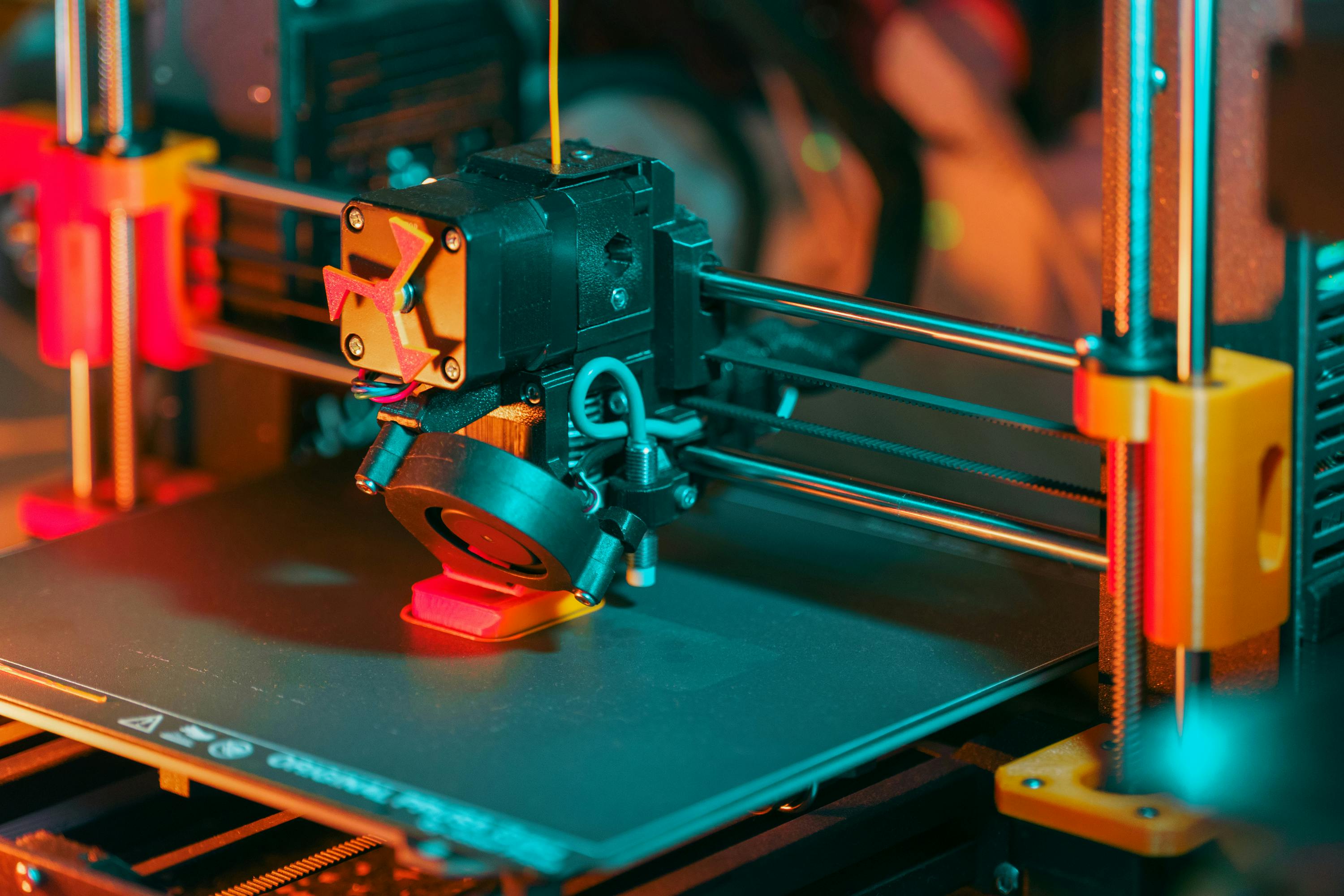
As long as the batch size is large enough, injection molding or die casting will always win in terms of unit price over additive manufacturing. However, many mass production families simply don't reach that volume, or have too many variants to use the same mold. For high-mix, low-to-medium volumes, the tool-less nature of additive manufacturing still makes it competitive in terms of total lifecycle cost.
| Annual Volume | Number of Variants | Typical Winner |
|---|---|---|
| Below 500 | Any | Additive |
| 500 to 5,000 | High (>5) | Usually additive |
| 500 to 5,000 | Low (1-2) | Situational |
| 5,000 to 50,000 | High | Additive or hybrid |
| 5,000 to 50,000 | Low | Tooling |
| Above 50,000 | Any | Injection / Casting |
Supply Chain Implications
A validated print file itself is a form of digital inventory. Parts don't have to sit on shelves; they exist as release-controlled files that any qualified machine on the network can produce when needed. For spare parts, obsolescence management, and field support, this changes the trade-off between inventory costs, lead times, and risks.
The cost is configuration control. For digital parts to be reproducible, the file, parameters, post-processing, and inspection plan must all be released together in the same version. If any part drifts, the others fail; if the factory does not have mature change management, it will quietly produce a part with the same exterior but different mechanical properties.
Real-World Mass Production Applications
The application profile of mass production additive manufacturing has converged on a few models where economic viability and certification stack up reliably. Here are three representative examples.
Case Study 1: Aerospace Bracket Family, 50 Variants, 200 to 1,000 Pieces Each
A Tier 1 aerospace supplier integrated 50 titanium alloy bracket variants into a DMLS production line operating under AS9100 certification, primarily using Ti-6Al-4V. The family's annual volume is 20,000 to 30,000 pieces, with each piece undergoing 12 to 18 post-processing steps, all with machine-batch-operator traceability. Key results: 40% faster than equivalent CNC, 60% faster than a 14-mold solution, and changes no longer require new tooling.
Case Study 2: Medical Device Housings Mass-Produced Under ISO 13485
A diagnostic instrument housing is produced annually at 3,000 units using MJF and PA12. The supplier holds ISO 13485, controls powder reuse ratios, validates post-processing cleaning, and maintains biocompatibility records according to ISO 10993. Approved batch release time shifted from "looks okay" for prototypes to "CMM report, specimen tensile test, CoC must be present before shipment."
Case Study 3: Low-Volume Automotive Interior Trim
For a niche vehicle project with an annual volume of 1,800 units, several interior trim pieces were made using SLS nylon. The OEM required PPAP-like documentation, batch mechanical property test specimens, and surface consistency to match internal painting. Based on this standard, the supplier had to establish a cyclical review mechanism akin to a production control plan—rather than relying solely on prototype approval memories for delivery.
Do's and Don'ts
| Do | Don't |
|---|---|
| Validate process, material, and surface finish together, and lock it down with the same release documentation | Treat a passed prototype as proof of mass production capability |
| Require full batch traceability from powder input to final inspection | Change parameters, recoater blades, or powder suppliers without re-validation |
| Choose suppliers whose certifications align with your end market | Assume additive unit cost will decrease with volume—it usually doesn't |
Common Mistakes
Teams deviate from mass production readiness in a few consistent ways: treating the first good part as final approval instead of cross-batch sampling; buying powder based solely on price without batch comparison; releasing parts before CMM programs are established; allowing suppliers to change consumable suppliers without an ECN. Every one of these will manifest within a few months of the first mass production batch.
Checklist Before Printing
- End-use volume, number of variants, and lifecycle length are documented.
- Process is selected based on geometry, material, and economics, not brand.
- Material is validated in its final state, including post-processing steps.
- Supplier certifications (ISO 9001 / AS9100 / ISO 13485) align with the end market.
- Batch traceability path from powder to CoC is defined.
- Sampling plan covers at least three batches, two operators, and two powder lots.
- First article, CMM program, CT, or equivalent NDT plan are released with the drawing.
- Change management and re-validation trigger conditions are written into the contract.
Design Highlights
The key for industrial additive manufacturing to gain a foothold in mass production lies in matching commercial conditions: high-mix, annual volumes of around 100 to 10,000, too many variants to justify tooling, and the supplier already holding the corresponding certification path. For applications falling within this range, additive manufacturing is not a compromise, but the correct choice.
Within this scope, the truly important design discipline is not geometric tricks, but system discipline: validated parameters, controlled raw materials, traceable batches, and a truly closed-loop inspection. These are the requirements for turning "one good print" into "a stable production line."


0 comments