
A wearable device team in Taoyuan completed 47 hardware iterations for their second-generation hearing aid within a 12-week sprint. The prototype costs alone burned through approximately NT$1.6 million, yet they managed to enter tape-out two weeks ahead of schedule. The key wasn't any single outstanding iteration, but rather their clear decision before the first week even began: how many iterations they were willing to invest, what questions each iteration could answer, and what signals would indicate when to stop. Most rapid prototyping projects never explicitly define these decisions, and schedules quietly slip away in this ambiguous zone.
The real trade-off is speed vs. fidelity, not speed vs. quality
Rapid prototyping is often misunderstood as "who can build it faster." In reality, the true trade-off is between iteration speed (how many learning loops can be completed per week) and prototype fidelity (how close each prototype is to the final mass-produced product). High speed allows you to quickly learn many small things about rough objects; high fidelity allows you to learn a few critical big things about near-production objects. If a project stays at either extreme for too long, it will either create the wrong product or never deliver a product at all.
True discipline lies in consciously adjusting this slider as the project progresses, and being able to determine in any given week whether the current bottleneck is on the speed axis or the fidelity axis. This article focuses on loop discipline across all prototype types (metal, sheet metal, PCB, soft molding, casting), rather than the plastic manufacturing process choices themselves.
Iteration Rhythm Divided by Project Phase
Different project phases should adopt different rhythms. If an iteration takes one week in the concept phase, that's a failure; if an iteration takes only one day in the pre-production validation phase, it almost certainly skipped validation steps. The table below summarizes typical rhythms observed in approximately 60 hardware projects annually at Orinovate.
| Phase | Iterations per Week | Cost per Iteration (USD) | Decisions Solved per Iteration | Main Bottleneck |
|---|---|---|---|---|
| Concept / Form | 3 – 5 | 80 – 250 | 6 – 10 | Speed |
| Fit / Ergonomics | 2 – 3 | 250 – 900 | 3 – 5 | Speed |
| Function / DV | 1 – 2 | 900 – 3,500 | 2 – 3 | Hybrid |
| Pre-production / PV | 0.5 – 1 | 3,500 – 12,000 | 1 – 2 | Fidelity |
Manufacturing Technologies Covering All Prototype Types
Plastic 3D printing is only a small part of the prototyping toolkit. A formal hardware project also requires metal, sheet metal, electronics, casting, and soft molding routes, each with its own cycle time and unit cost. By viewing them as the same menu, engineers can switch lines in real-time when bottlenecks change.
| Prototype Type | Process | Typical Lead Time | Unit Cost (USD) | Best for Validating Signals |
|---|---|---|---|---|
| Plastic Functional Parts | SLS / MJF Nylon | 3 – 5 Days | 40 – 220 | Active Hinges, Snaps |
| Metal Structural Parts | SLM / DMLS Titanium or AlSi10Mg | 7 – 12 Days | 350 – 2,800 | Lattices, Internal Channels |
| Metal Precision Parts | 5-Axis CNC Aluminum Parts | 4 – 8 Days | 180 – 1,400 | True Tolerances, Fit |
| Sheet Metal | Laser + Brake Press | 3 – 6 Days | 60 – 380 | Welded Assembly Fit, Rigidity |
| PCB (Rigid Board) | Quick-Turn 2–6 Layers | 48 – 96 Hours | 25 – 180 | Signal Integrity, EMC |
| Cast Resin | PU / Silicone Mold | 8 – 14 Days | 30 – 140 | 10–50 Piece Appearance Batch |
| Soft Tooling | Aluminum MUD Inserts | 18 – 28 Days | Mold 2,000 – 8,000 | Trial Production Plastic Shots |
When to Stop Iterating: Signal vs. Noise
The most expensive failure mode in rapid prototyping is continuing to iterate past the point where new information is generated. When each new prototype mainly reconfirms the conclusions of the previous one, you are paying for noise. Our rule of thumb: when the number of new decisions resolved per iteration drops below 1.5 for two consecutive rounds, freeze the design and move to the next phase.
| Signal Type | Healthy Iteration | Diminishing Returns | Action |
|---|---|---|---|
| New Decisions Resolved | ≥ 3 | < 1.5 | Freeze and Proceed |
| Repeat Same Defect | First or Second Time | Third Time Same Root Cause | Stop, Redesign Approach |
| Stakeholder Change Request | Substantial | Only Cosmetic Remaining | Lock Appearance and Proceed |
| Test Failure | Reveals New Failure Mode | Repeats Known Mode | Upgrade to Higher Fidelity Version |
Parallel Iteration, Not Purely Serial
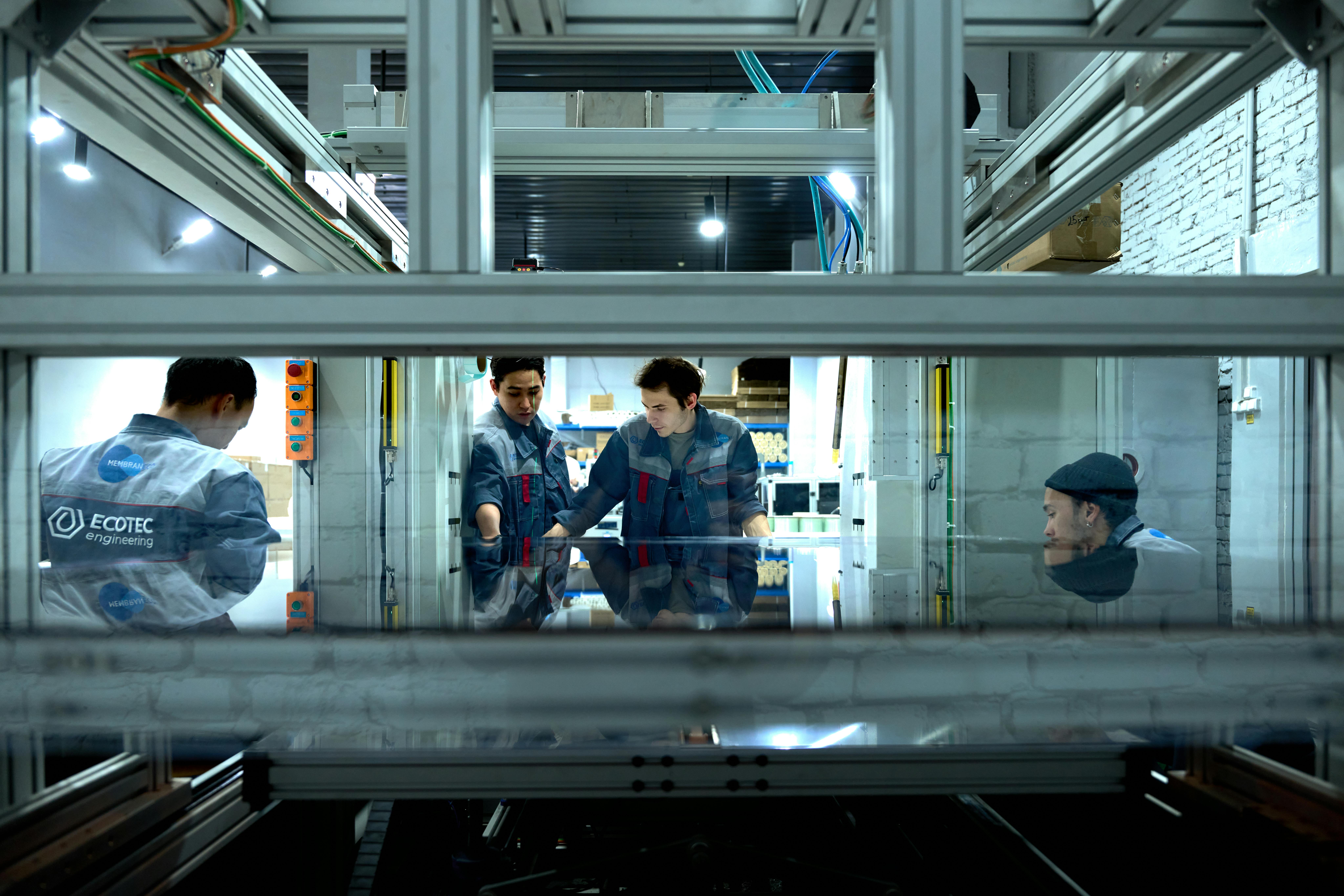
A serial loop at a one-week rhythm can complete 12 iterations in a quarter; at the same rhythm, opening three parallel branches can achieve 36 iterations, but only if branch merging is strictly managed. The most common mistake is allowing parallel branches to geometrically diverge, leading to painful re-convergence before mass production. The correct approach is to only fork the variables to be tested at the moment (e.g., sound port geometry), while other components are shared across all branches.
How Digital Manufacturing Services Compress the Loop
Quotes and shipments in under 24 hours change not just the schedule, but engineer behavior. When CNC quotes return in minutes and parts arrive in three days, engineers stop consolidating batches to save on shipping and start iterating on each decision independently. This compression effect is non-linear: reducing per-loop time from 7 days to 3 days often more than doubles useful learning accumulated per quarter, because it falls below the threshold for engineers to context-switch between iterations.
Application Scenarios: Three Loops, Three Different Disciplines
Case Study 1: Metal SLM Prototype Iteration for Drone Motor Mounts
A logistics drone OEM needed AlSi10Mg motor mounts that could pass 14g vibration specifications. SLM prototypes cost NT$22,000 per piece, with a 9-day cycle. The team did not iterate the entire bracket, but rather made the rib lattice the sole variable, sharing the mounting interface across five branches. In the fourth round, the decision rate dropped to 1, and the team immediately froze, ran a full DV, and then shipped. Total cost was NT$480,000 (6 SLM pieces), below the internal budget of NT$900,000.
Case Study 2: Parallel Iteration of PCB and Casing for a Pet Camera
Hardware projects typically treat PCB and casing development as serial. This consumer IoT team forced a parallel approach: they froze the board outline and connector positions by the second week, then iterated independently on both lines. The PCB followed a 72-hour quick-turn cycle, and the SLA casing followed a 48-hour cycle. In the eighth week, they merged for thermal/EMC integration testing. Parallelization compressed the critical path from 16 weeks to 10 weeks, at the cost of one casing being wasted due to an antenna exclusion zone change late in the process.
Case Study 3: Rapid Sheet Metal Welded Assembly for Battery Test Bench
A battery testing equipment manufacturer needed a 1.2m welded steel frame completed in three weeks; a full machining fixture would take eight weeks. The team used 3mm steel plate laser cutting + press brake, spot-welding the frame on the fifth day for fit confirmation, then spending two rounds adjusting bracket positions, with final welding on the fourteenth day. The total cost was 38% of the machining solution, and the post-weld stress-relieved dimensional accuracy was ±0.4mm, sufficient for a test bench but insufficient for a mass production machine—an appropriate fidelity match.
Recommendations and Avoidances
| Recommendation | Avoid |
|---|---|
| Define iteration budget (number of iterations and cost) before starting | Treating each iteration as an isolated decision |
| Only fork the variables being tested in parallel branches | Allowing parallel branches to diverge on shared geometry |
| Track decision resolution rate per iteration | Only tracking part count or cost |
| Align fidelity with the current problem | Paying for production-level fidelity costs in the concept phase |
| Freeze aesthetic specifications early to protect mechanical iteration cycles | Restarting aesthetic specifications during the DV phase |
Common Mistakes
| Mistake | Symptom | Correction |
|---|---|---|
| Continuing to iterate past diminishing returns | Each round merely confirms the previous one | Apply the < 1.5 decision rate freeze rule |
| Thinking only serially | Critical path = sum of all loops | Identify at least two variables that can be parallelized |
| Single process preference | Always using SLA or always using CNC | Lay out all six prototype types at the start |
| Restarting aesthetics late in the process | Redefining colors or textures during the DV phase | Lock aesthetics at the end of the fit phase |
| No iteration ledger | Untraceable costs for each decision | Record cost and number of decisions for each iteration |
Pre-Project Checklist
Most iteration loop pathologies are decided in the first week, not the tenth. Walking through this checklist before the kickoff meeting can eliminate most of the failure modes described above before even touching CAD.
- Iteration budget (number of iterations and cost) approved, including 20% contingency
- Six prototype types (plastic, metal, sheet metal, PCB, casting, soft molding) explicitly included or excluded
- Decision rate freeze threshold agreed upon (default: two consecutive rounds < 1.5)
- At least two parallelizable variables identified, and merge weeks defined
- Aesthetic specifications frozen at the latest by the end of the fit phase
- SLA lead times confirmed with all process suppliers, including PCB quick-turn
- Iteration ledger template ready (each row: cost, number of decisions, signal type)
Design Notes
Rapid prototyping is first and foremost a budgetary discipline, and secondly a manufacturing discipline. Teams that can clearly calculate the number of iterations, parallelize as much as possible, consciously switch fidelity, and decisively stop when the decision rate flattens, are the ones that can deliver products that meet market standards under dual pressure of schedule and cost. Speed is a means, not an end; iterative discipline is the source of competitive advantage.


0 comments