
The PolyJet J850 stacks rigid VeroClear, flexible Agilus30, and six process colorants in 14-micron voxels in a single print. The resulting mobile phone appearance model is almost indistinguishable from an injection-molded product under studio lighting. With layer thicknesses of 16–27 microns, adjustable transparency from fully clear to matte, and Pantone colors embedded directly within the part rather than sprayed on the surface, no other desktop-level process comes as close to mass-produced aesthetics. This is why industrial design studios and surgical planning labs choose PolyJet when they need to "convince non-engineers."
This article focuses on PolyJet's use as a general prototyping platform for appearance models, anatomical replicas, transparent fluid channels, and early presentation pieces. A separate article is dedicated to rigid-flexible overmolding; here, we maintain a broad perspective, emphasizing the reasons for choosing PolyJet over other additive manufacturing routes, its material palette, and DFM values.
PolyJet vs. SLA, DLP: Mechanical Differences
PolyJet uses inkjet-like print heads to jet tiny droplets of photopolymer resin, which are then cured by a UV lamp immediately behind. SLA and DLP, on the other hand, pull parts out of a resin vat, with each layer cured onto a thin film of liquid resin. This mechanical difference leads to three important consequences: PolyJet can mix up to seven resins in a single build; its surface finish is very similar in X/Y and Z directions (layer thickness 16–27 microns); and because it jets rather than submerges, it can use highly carbon-blackened gel supports, making support removal easier for complex geometries.
| Property | PolyJet (Jetting) | SLA / DLP (Vat) |
|---|---|---|
| Curing Mechanism | UV-cured jetted droplets | Laser or projector-cured resin vat |
| Number of Materials per Build | Up to 7 at once | One resin per build |
| Color | CMYKWCl full-color voxels | Single resin color |
| Layer Thickness | 16–27 microns (High Res) | Typically 25–100 microns |
| Support | Water-soluble/Gel (SUP706/707) | Lattice supports require manual removal |
| Thin Wall Strength | Brittle, UV sensitive | Tougher engineering resins available |
| Best Use Cases | Appearance, anatomical, multi-material | Functional fit, transparent durable parts |
PolyJet Materials for Prototyping
Stratasys categorizes PolyJet resins as Vero rigid opaque, VeroClear transparent, Agilus rubber-like, RGD high-temperature, DigitalABS simulated, and BioCompatible MED series. In practice, most appearance prototypes rely on three to four of these.
| Series | Role in Prototyping | Typical Applications |
|---|---|---|
| Vero (Rigid Opaque) | Casings, structures | Appearance housings, mold simulation |
| VeroClear | Transparent rigid | Lenses, bottles, fluid channels |
| VeroVivid CMYKW | Full-color mapping | Pantone matched consumer products |
| Agilus30 / A30 | Rubber-like (30–95 Shore A) | Gaskets, soft grips – see overmolding article |
| RGD525 / HT | High-temperature rigid (HDT ~80°C) | Engine bay visual prototypes |
| DigitalABS Plus | ABS simulation | Snap-fits, drop-test appearance parts |
| BioCompatible MED | Skin contact safe | Dental, surgical planning models |
DFM Values for Design
PolyJet is geometrically forgiving but mechanically unforgiving. Design according to the following values, and prints will match CAD when removed from the tray; ignore them, and thin walls will separate after support removal or a pinch of a fingernail.
| Feature | Minimum | Recommended |
|---|---|---|
| Layer Thickness | 16 microns (High Res) | 27 microns (High Speed) |
| Wall Thickness | 0.3 mm | 1.0 mm for easy handling |
| Raised Text Height | 0.5 mm | 1.0 mm |
| Engraved Text Depth | 0.5 mm | 0.7 mm |
| Hole Diameter | 0.5 mm | 1.0 mm |
| Fit Clearance | 0.2 mm | 0.3 mm |
| Build Size (J850) | 490 × 390 × 200 mm | Pack small parts densely for color consistency |
Appearance Fidelity: Voxel Color and Textures
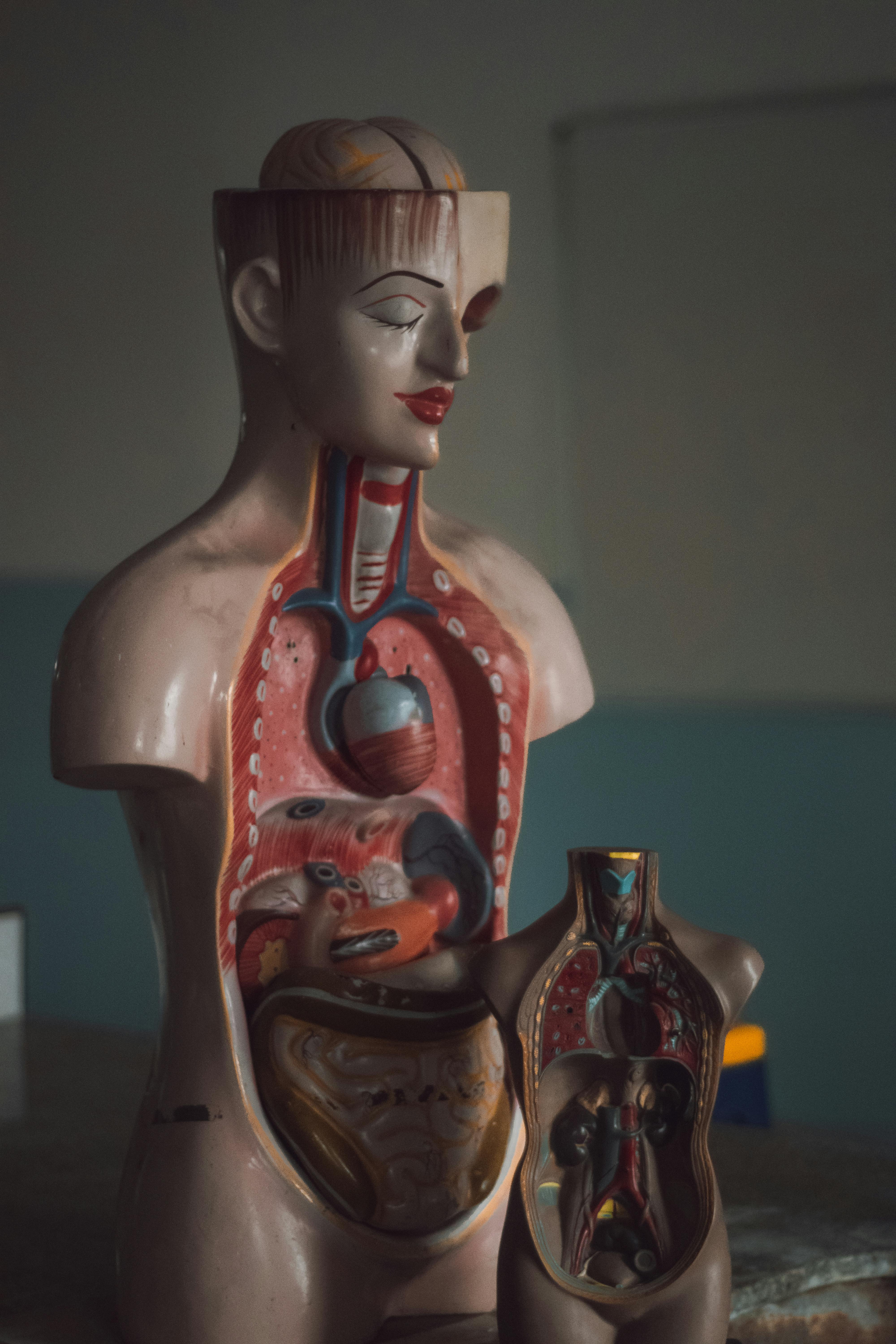
On the J850, each voxel can be assigned color from calibrated CMYKW plus transparent swatches, meaning your OBJ or 3MF textures remain intact after printing, just like a 2D graphic printed on paper. Pantone colors, managed by GrabCAD Print's built-in color management, can be replicated with an accuracy of Delta E ≤ 3.
For transparent parts, VeroClear can achieve approximately 88% light transmission after a clear coating; lenses, bottles, and liquid display parts can be convincing without further milling. A single application each of Novus polishing compound and automotive wax, followed by a UV-protective clear coat after post-curing, can extend outdoor durability to 6–8 months.
Anatomical, Medical, and Dental Prototypes
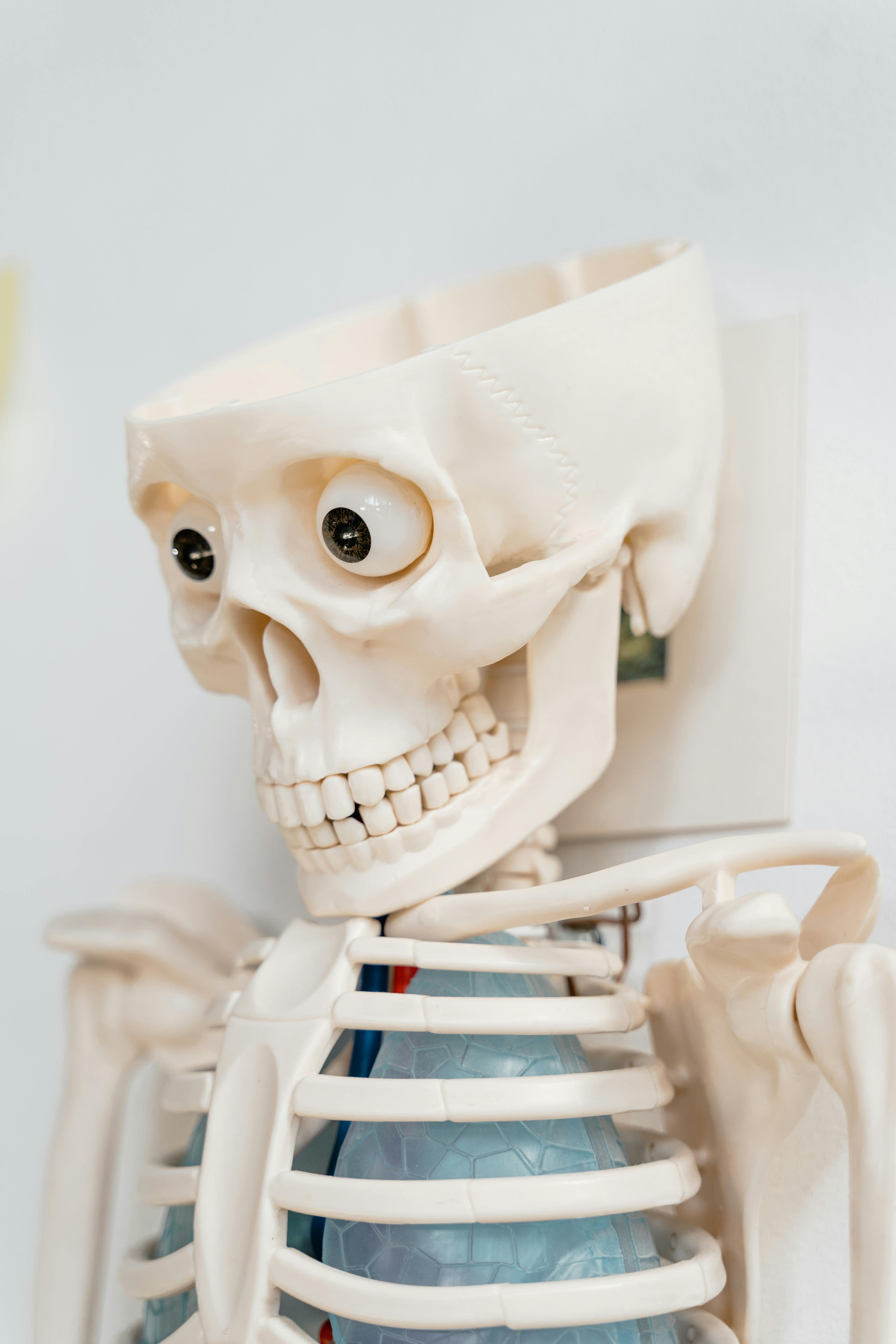
Medical teams use PolyJet to directly convert DICOM segmentation files into tangible replicas. Soft blood vessels with Agilus30, calcified plaques with rigid Vero, and translucent tissues with VeroClear can coexist in the same part. Dental labs create try-in bridges and surgical guides with MED-grade resins, maintaining gaps down to 0.1 mm.
PolyJet-Dominated Applications
The following three case studies demonstrate where PolyJet is not just viable, but the default choice, and do not overlap with the rigid-flexible overmolding cases in the sister article.
Case Study – Pantone Matched Consumer Electronics Appearance Model
A wearable audio startup needed to validate twelve colorways for a single earbud case before a trade show. Injection-molded painted samples would take six weeks per color. The PolyJet J850 completed twelve pieces on one tray in 14 hours, achieving a Delta E of 2.1 for Pantone 2386 C, meeting the client's required Delta E ≤ 3 standard. Parts were submitted to reviewers that evening, with zero color iteration costs.
Case Study – Kidney Tumor Surgical Planning Anatomical Model
Urologists printed patient-specific kidneys: the tumor in VeroMagenta, healthy parenchyma in translucent VeroClear, and renal artery branches in rigid VeroYellow. Surgeons used the physical model to plan the tumor resection path, reducing estimated laparoscopic surgery time by 22 minutes.
Case Study – Microreactor Transparent Fluidic Visualization Prototype
A chemistry team needed to observe laminar flow in a 0.8 mm diameter serpentine channel. A PolyJet block made of VeroClear with water-soluble gel support, after 24 hours of cold water immersion for support removal and Novus polishing, allowed clear tracing of dye streaks with a high-speed camera, achieving optical quality without milling any surfaces.
Do's & Don'ts
| Do | Don't |
|---|---|
| Embed colors in 3MF/OBJ textures | Substitute spray painting for voxel colors |
| Orient aesthetic surfaces upwards for lowest roughness | Orient aesthetic surfaces towards the tray or support |
| Store finished parts away from direct UV light | Leave PolyJet prototypes on a sunlit desk for weeks |
| Use SUP707 water-soluble support for internal channels | Rely on manual removal of internal supports |
| Specify High Mix (HM) mode for optimal color blending | Assume High Speed (HS) mode appearance is equivalent to HM |
Common Mistakes and How to Avoid Them
| Mistake | Why it Fails | How to Avoid |
|---|---|---|
| Using 0.3 mm ribs for functional testing | Prints fine, but breaks upon first handling | Raise all handled surfaces to ≥ 1.0 mm |
| Ignoring UV yellowing of VeroClear | Noticeable yellowing within 30–60 days under indoor light | Photograph appearance parts immediately; store in opaque boxes |
| Placing critical color parts at the edge of the tray | Color consistency can drift at tray edges | Place critical color parts in the center of the tray |
| Using gloss mode for critical tolerance areas | Glossy surfaces maintain tolerances worse than matte | Specify matte for dimensionally critical surfaces; use gloss only where aesthetically necessary |
| Over-specifying RGD525 high-temp resin for non-thermal parts | Paying a resin premium without engineering benefit | Use standard Vero unless operating temperature genuinely exceeds standard Vero's HDT |
Pre-Print Checklist
- Export textures as 3MF or VRML, including color per face or per voxel.
- Ensure wall thickness for user-touched surfaces is ≥ 1.0 mm.
- Orient VeroClear transparent parts with viewing surfaces facing up, away from tray contact.
- Set SUP707 support for internal channels or narrow cavities.
- Explicitly assign gloss/matte finishes per surface, do not rely on printer defaults.
- Allow one day for multi-material prints for support soaking time.
Design Considerations
PolyJet is worth incorporating into your prototyping toolkit only when the prototype needs to closely resemble the final product in appearance, feel, and meaning; it is not designed to withstand drops, high temperatures, or UV exposure. Actively leverage voxel colors and transparent optics, strictly adhere to a 0.3 mm wall as an absolute minimum, orient display surfaces upwards, and photograph immediately after support removal—by doing so, PolyJet can reliably accelerate design decisions.


0 comments