
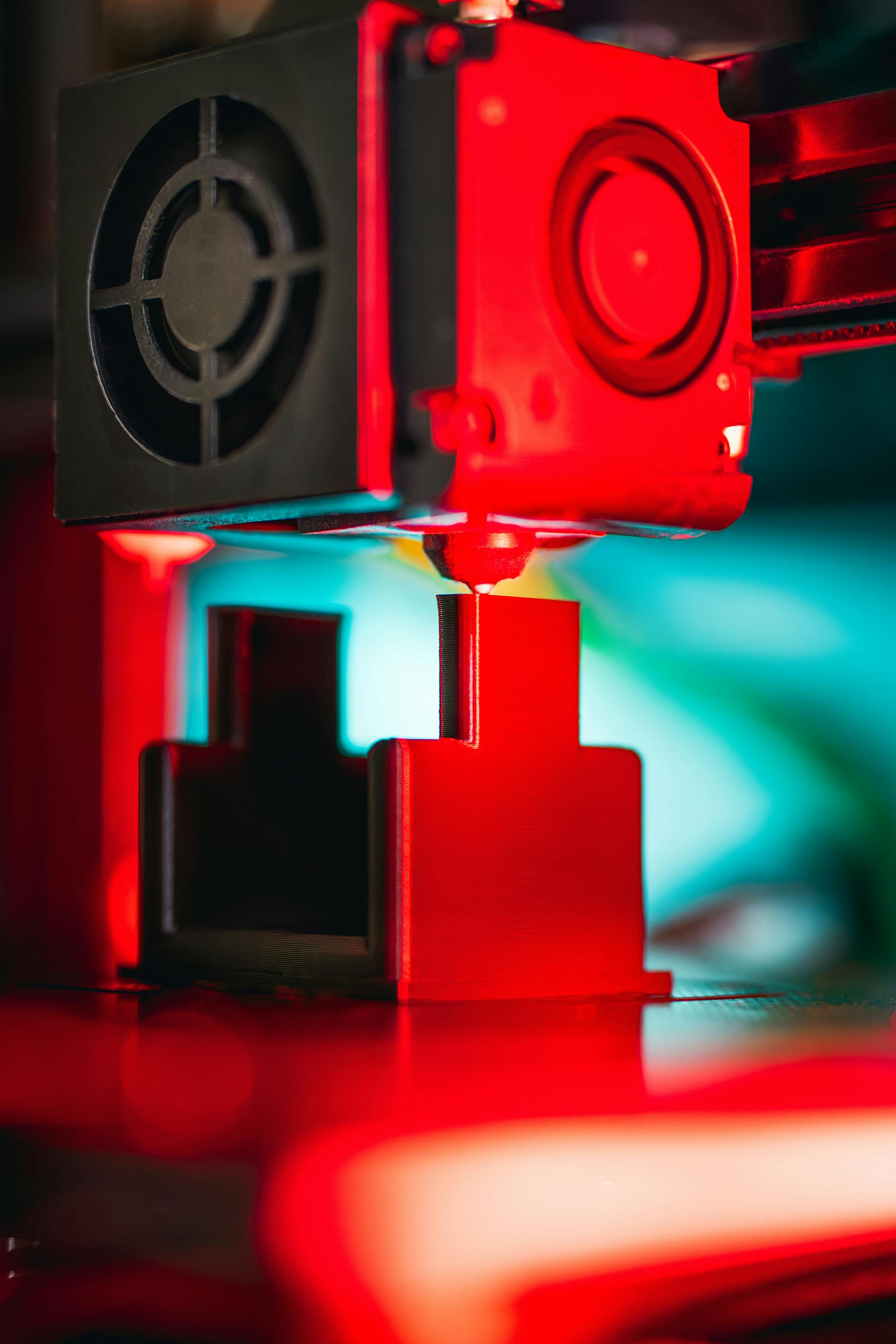
A mid-sized hearing aid manufacturer we assisted had to produce 14,000 custom shells quarterly, each corresponding to an individual ear canal scan. Three years ago, they invested USD 220,000 to set up a semi-automatic milling line, running 20 hours a day just to keep up. We then moved the shell production to four networked SLA machines, with a layer thickness of 50 μm. The per-unit cost dropped from USD 9.80 to USD 3.40, and daily output increased from 210 to 640 units. The original milling line was repurposed for titanium abutments—the work that truly justified its depreciation.
This is the reality of "additive manufacturing for end-use parts" in 2026. It's not about a print farm replacing all injection molding machines, but rather additive manufacturing taking over tasks where mold economics fail—patient-specific parts, geometrically complex low-to-mid volume parts, and integrated assemblies that previously required twenty screws. The key to drawing this distinction correctly isn't the printer itself, but in choosing the right parts to give it.
Where Additive Truly Outperforms Tooling
Additive manufacturing gains a foothold in mass production by meeting one of four conditions: annual volume is below the mold breakeven point (typically 500–5,000 units depending on part size), geometry cannot be demolded, late-stage design changes would scrap the mold directly, or part integration saves more in BOM costs than the increased per-unit cost. Outside these four areas, injection molding and die casting still significantly lead in per-unit pricing. A common mistake is choosing additive manufacturing simply because it "can be used," rather than because it is "the cheapest."
| Condition | Example | Additive Advantage |
|---|---|---|
| Annual volume < 3,000 | Robotic end effectors | Saves USD 25k in molds + 7-week lead time |
| Patient-specific geometry | Surgical guides, clear aligners | One-off economic viability |
| Undemoldable geometry | Conformal cooling internal channels | Impossible to mill |
| Frequent late-stage design changes | Pre-launch consumer products | Simply re-print with new file |
| Part integration | Fuel nozzle 20→1 | Saves BOM and assembly labor |
| Legacy product spares | Household appliances from twenty years ago | No need to re-create molds |
Processes That Can Survive Mass Production
Machines that perform well in the prototyping stage may not be able to sustain the repeatability and capacity requirements of mass production. In plastics, MJF and Carbon DLS dominate, with SLS close behind; in metals, DMLS and Binder Jetting lead. The table below evaluates these processes based on reasonable annual volume and per-unit cost.
| Process | Reasonable Annual Volume | Unit Cost | Primary Materials |
|---|---|---|---|
| MJF | 500–50,000 | USD 8–90 | PA12, PA11, TPU |
| Carbon DLS | 1,000–100,000 | USD 4–40 | EPU, RPU, EPX |
| SLS | 200–10,000 | USD 12–110 | PA12, PA11, Glass-filled Nylon |
| DMLS / SLM | 50–5,000 | USD 400–4,500 | Titanium, 17-4 PH, Inconel |
| Binder Jet Metal | 500–50,000 | USD 40–220 | 316L, 17-4, Tool Steel |
| FDM (Mass Prod) | 100–2,000 (Jigs) | USD 30–600 | PC, PEEK, ULTEM |
Honestly Looking at Breakeven Points
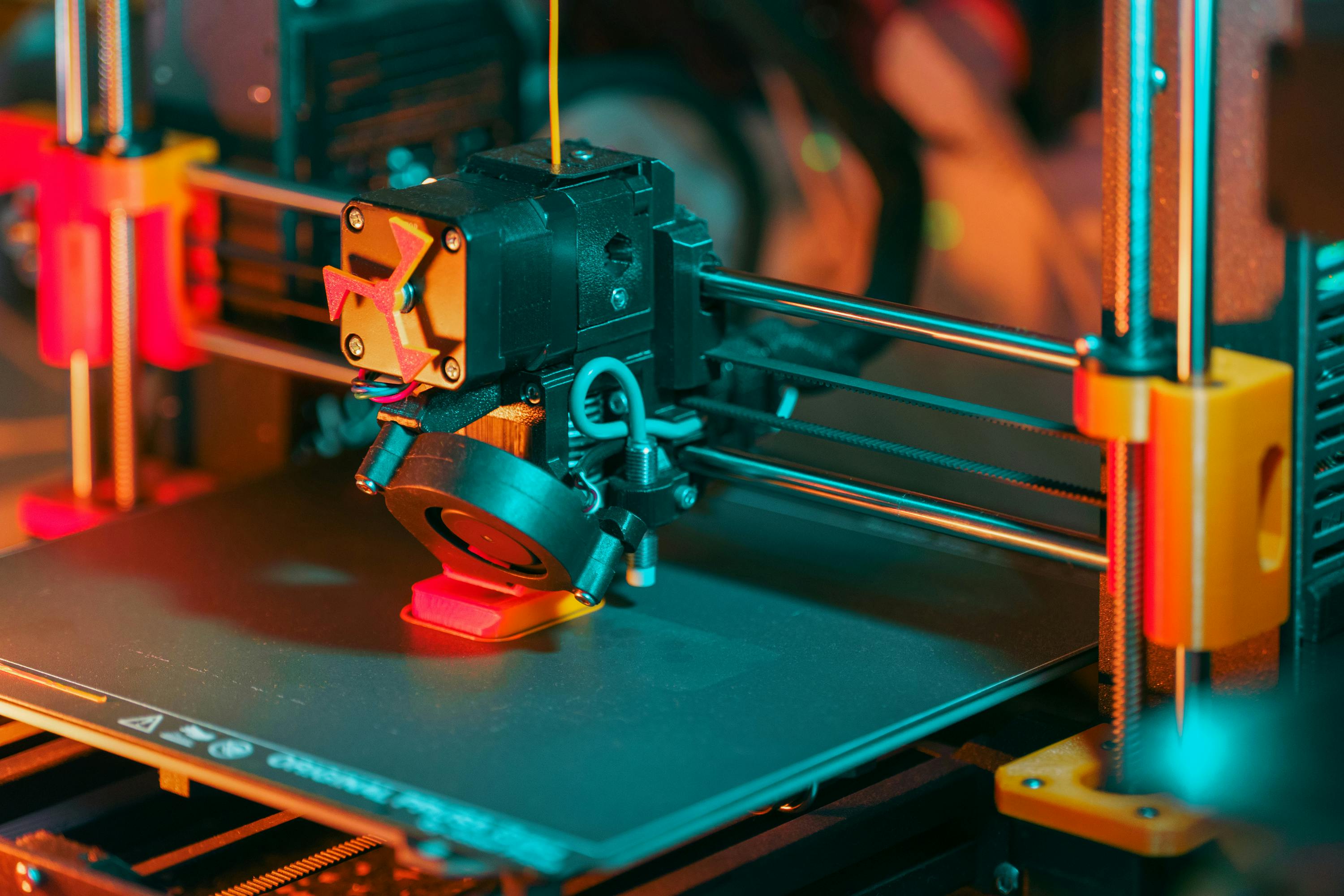
Every engineer asks the same question: At what volume should I invest in a mold? The answer is never a single number. It varies with wall thickness complexity, number of cavities, aesthetic requirements, and whether the mold requires side pulls. For a 90mm PA12 shell with snaps and bosses, MJF is cheaper than a single-cavity aluminum mold up to an annual volume of 1,800 units; if the bosses require side pulls, the crossover point shifts to 3,400 units.
| Part Size / Complexity | MJF Advantage Up To | Crossover Point | Injection Mold Cost |
|---|---|---|---|
| 50 mm simple shell | 2,500 units | 1,500–3,000 | USD 14,000–22,000 |
| 90 mm shell with snaps | 1,800 units | 1,200–2,400 | USD 22,000–35,000 |
| 150 mm with side pulls | 3,400 units | 2,500–4,200 | USD 38,000–65,000 |
| Transparent optical part | 800 units | 500–1,200 | USD 28,000–45,000 |
| TPU gasket | 6,500 units | 4,000–9,000 | USD 12,000–20,000 |
Application Cases
GE Integrates 20 Parts into 1 for Fuel Nozzle
The LEAP engine's fuel nozzle was originally an assembly of twenty welded parts. Each joint was a potential leak point, and each weld a quality control item, weighing a total of 918 grams. GE Aviation specifically redesigned it for DMLS, printing it as a single cobalt-chrome integrated piece weighing 567 grams. Over 100,000 units have been produced this way to date.
The truly critical design action: The internal fuel swirl channel, which originally required five welds to construct, was redesigned as a continuously printed conformal channel. Leak path potential was eliminated, inspection steps decreased by 70%, and single-unit assembly time dropped from 4.5 hours to 18 minutes of post-processing.
Estimating based on approximately 2,600 LEAP-powered aircraft in service, the integrated design saves roughly USD 3,000,000 annually per aircraft in fuel and avoided maintenance costs. This is the revenue from additive manufacturing—not found next to the printer, but throughout the remaining service life of each aircraft.
Align Technology Prints 850,000 Aligner Shells Per Day
Align Technology operates one of the largest additive manufacturing mass production facilities on earth: a continuous line of SLA machines running 24 hours a day, producing approximately 850,000 patient-specific aligner master models daily. Each master model is used only once to thermoform a single clear aligner, then discarded. At this scale, the cost per model is close to USD 0.70. No other process allows for changing geometry with each cycle without incurring additional tooling costs.
Tier 1 Automotive Supplier Ships 18,000 MJF Snaps Annually
A European Tier 1 supplier manages 14 types of interior snaps, with annual volumes ranging from 800–2,400 units per type, fluctuating with model changes. Tooling for all would cost USD 420,000. By switching to MJF printing PA12, the cost per piece is USD 3.20–5.80 with no tooling costs, and geometry changes can be made in two days instead of eight weeks. Annual expenditure is USD 78,000—a 76% reduction compared to the tooling path.
Designing Additive Parts for Mass Production
| Do | Avoid |
|---|---|
| Validate materials for end-use temperature and UV conditions | Assuming prototype resins are production-grade |
| Lock print orientation in work instructions | Letting operators decide orientation |
| Use heat-set inserts for threads | Directly printing threads below M4 |
| Allocate 20–35% of print cost for post-processing | Considering machine time as the final cost |
| Certify two contract manufacturers before mass production | Single sourcing critical production parts |
| Move to MJF/DLS when annual volume exceeds 1,000 | Defaulting to SLA for all parts |
Mistakes That Doom Additive Mass Production Projects
| Mistake | Reason for Failure | How to Avoid |
|---|---|---|
| Prototyping with resin, shipping with nylon | Different fit and flex behavior | Validate with production materials from day one |
| Ignoring anisotropy | Z-axis strength only 40–60% of XY | Align loads with print plane |
| Skipping IQ/OQ for medical parts | Caught in FDA audits | Document build file version and material lot numbers |
| Underestimating post-processing budget | Actual cost is 1.3–1.5 times printing cost | Request quotes with full surface finish specifications |
| Treating a single machine as process control | Variability between machines | Demand full fleet SPC from contract manufacturers |
| Not considering obsolescence | Machine reaches end-of-life mid-project | Choose materials supported by at least two platforms |
When Metal Additive Manufacturing Makes the BOM Cheaper
Metal DMLS rarely wins when comparing "a single part to a solid machined part." It excels in integrated assemblies (fuel nozzles, heat exchangers), impossible-to-machine geometries (conformal cooling in mold inserts), and low-volume aerospace certified parts. Binder Jetting is the exception: for palm-sized 316L or 17-4 PH parts over 500 units, the sintered unit cost is USD 40–120—competitive with MIM, but without the need for MIM tooling.
Mass Production Fit by Industry
| Industry | Optimal Process | Typical Annual Volume | Unit Cost |
|---|---|---|---|
| Aerospace Structural Components | DMLS Titanium | 50–2,000 | USD 400–4,500 |
| Medical Devices | SLA + DMLS | 500–50,000 | USD 6–180 |
| Automotive Interior | MJF | 2,000–40,000 | USD 4–35 |
| Dental Aligner Master Models | SLA | Industry-wide 850,000/day | USD 0.60–1.20 |
| Consumer Eyewear | MJF | 5,000–100,000 | USD 6–22 |
| Industrial Spares | SLS + FDM | 20–500 | USD 40–400 |
Mass Production Readiness Checklist
- Are production materials certified for full operating temperature and UV conditions?
- Have quotes been obtained from two contract manufacturers using the same STL and surface specifications?
- Is the print orientation locked in work instructions, rather than being determined by the operator?
- Does the BOM list post-processing as a separate cost item?
- Have IQ/OQ/PQ been completed for medical or aerospace parts?
- Is there a tested backup in case of primary contract manufacturer machine failure?
- Does the unit cost model include 15% for yield loss and rework?
- Is the annual volume for the second year still below the injection molding crossover point?

Design Considerations
Using additive manufacturing for end-use production is not a single answer but a portfolio decision. Pick parts where mold economics fail, validate materials under real-world conditions, honestly budget for post-processing, and secure dual sourcing before mass production. Teams that get this right won't be talking about their print farm, but about items disappearing from the BOM, fourth-week design changes that used to cost USD 30,000, and customized geometries that were impossible to ship six years ago.


0 comments