
A consumer brand lost a USD 4.2 million retail contract in Q3 2025 because its blister packaging substrate was virgin ABS, and the channel procurement specification required 30% post-consumer recycled (PCR) content, which had become a hard requirement, not a preference. The brand had been using the same ABS for 11 years. The alternative took 14 weeks, cost USD 78,000 for retooling and re-validation, and the product was off the shelves for an entire season. The lesson isn't that PCR ABS exists—it has been sold for decades—but rather the speed at which alternative feedstocks moved from a "plus" to a "shelf entry barrier" was faster than most BOM updates.
The feedstock map for injection molding in 2026 is broader than ever: bio-based resins, post-consumer and post-industrial recycled grades, mineral-filled formulations, and engineered alternatives that allow processors to directly substitute virgin materials without changing molds or cycle times. This article is a practical guide to alternative feedstocks worth knowing, organized by "what they truly offer"—cost, carbon footprint, lifecycle, regulatory status—and points out where they might quietly break mold designs originally written for virgin materials.
Four Categories of Alternative Feedstocks with Real Volume
Discussions about alternative feedstocks are more lively than the available volume. Most serious injection molding work in 2026 uses one of four categories: Post-Consumer Recycled (PCR), Post-Industrial Recycled (PIR), Bio-based (plant-derived or bio-attributed), and Mineral-Filled (replacing part of the polymer with low-cost fillers). A fifth category—chemical recycling and mass balance grades—is growing but still limited in volume and certification complexity.
| Family | Source | Cost Relative to Virgin | Property Impact | Practical Max Content |
|---|---|---|---|---|
| PCR (Closed Loop) | Controlled collection, same resin | +5 – 25% | Minimal impact if well-sorted | 50 – 70% |
| PCR (Market Grade) | General post-consumer | -10 to +15% | Inconsistent, color variation | 20 – 40% |
| PIR (In-house Scrap) | In-house regrind | -30 to -60% | Minimal impact on first regrind | 25 – 100% |
| Bio-based (PLA, PHA) | Plant sugars | +30 – 80% | Lower heat resistance, different processing | Replaces specific grades |
| Bio-attributed (Mass Balance) | Certified feedstock substitution | +15 – 30% | Same as virgin | Up to 100% |
| Mineral-Filled | Talc, calcium carbonate, glass beads | -10 to -25% | Higher stiffness, increased density | 10 – 40% |
| Chemical Recycling | Depolymerized waste | +10 – 25% | Same as virgin | Up to 100% |
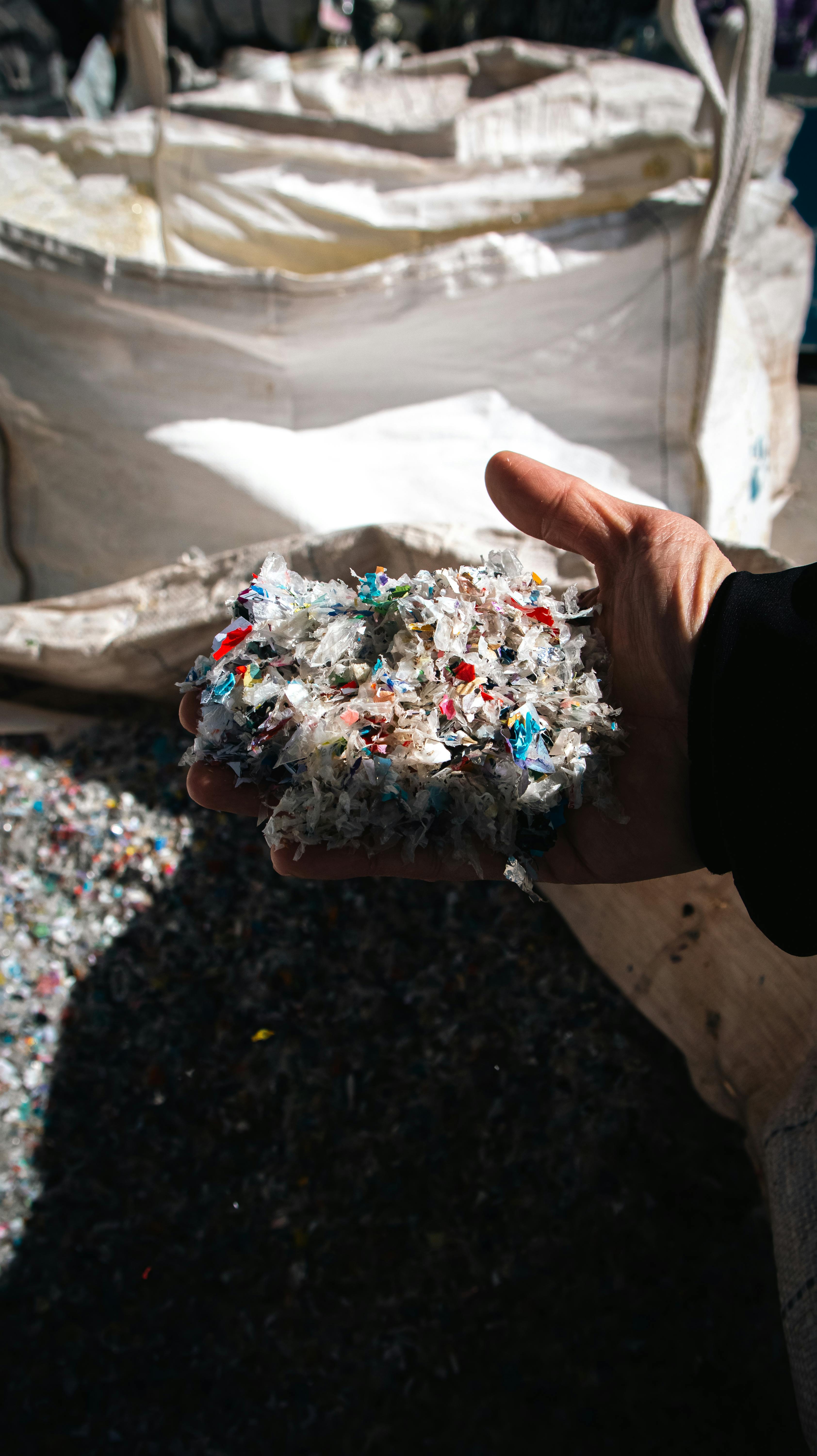
PCR Content: The Fastest-Acting Regulation
By 2026, EU Packaging and Packaging Waste Regulation (PPWR) requires 10-35% PCR content depending on the packaging type; California SB 54 sets a 30% PCR floor for rigid plastic containers, gradually increasing by 2032. Consumer brands in the US, Europe, and increasingly Southeast Asia now consider 25-35% PCR as the minimum for retail packaging. This is a design constraint at the BOM level, not a marketing choice, and will flow into injection-molded casings, closures, and handle components.
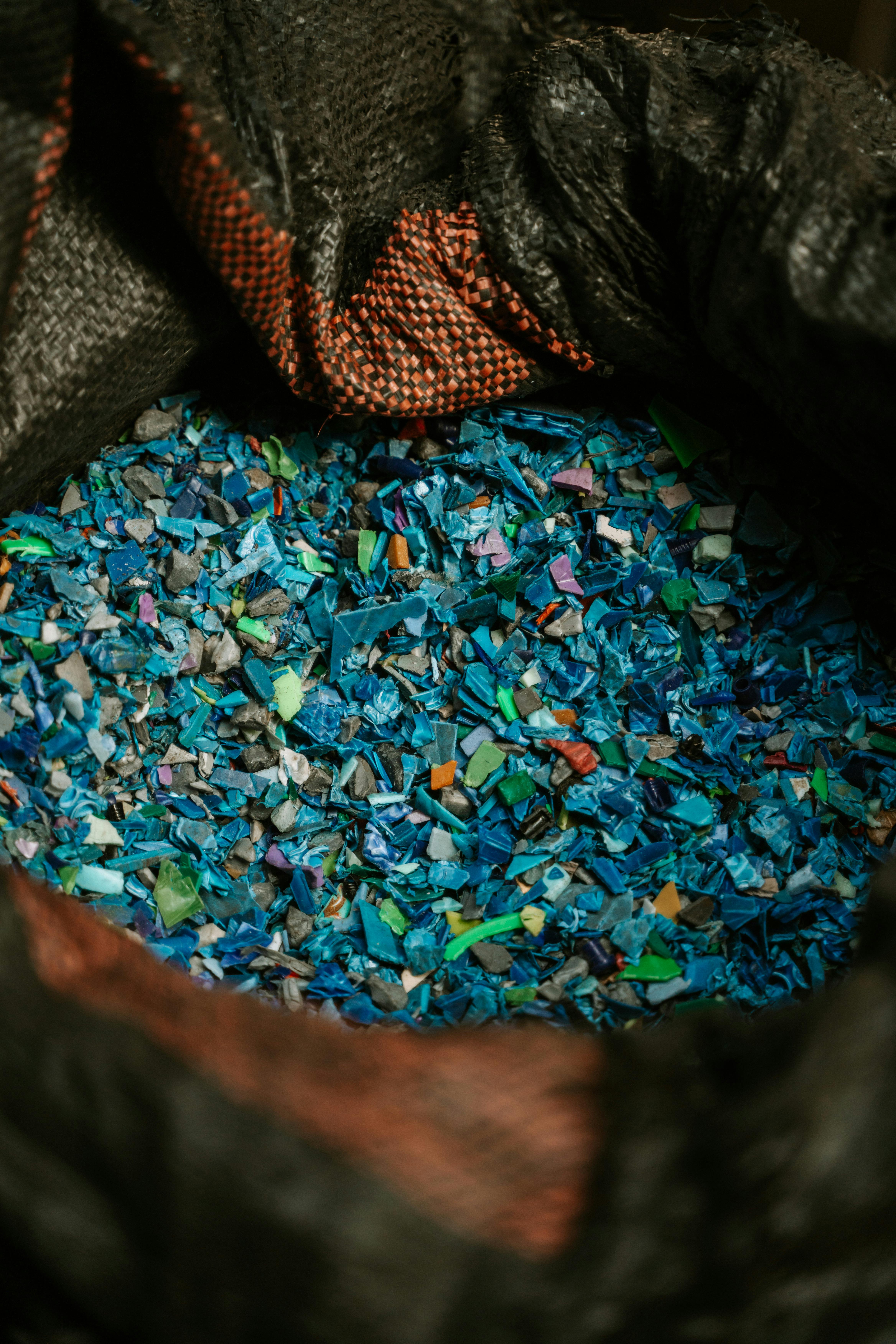
PCR grades are not direct drop-ins. Melt flow rates for nominally equivalent grades are typically 15-40% lower than virgin, colors are warmer with high batch variability, and speckling can be seen at over 40% content. Molds originally gated for virgin ABS MFR 25 often short-shot with MFR 15 PCR; typical fixes involve enlarging gates by 0.2-0.4 mm and increasing mold temperature by 10-15 °C. For stable mass production transitioning from virgin to 30% PCR, expect mold adjustments budgeted at USD 2,000-12,000.
Bio-based vs. Bio-attributed: A Distinction Worth Understanding
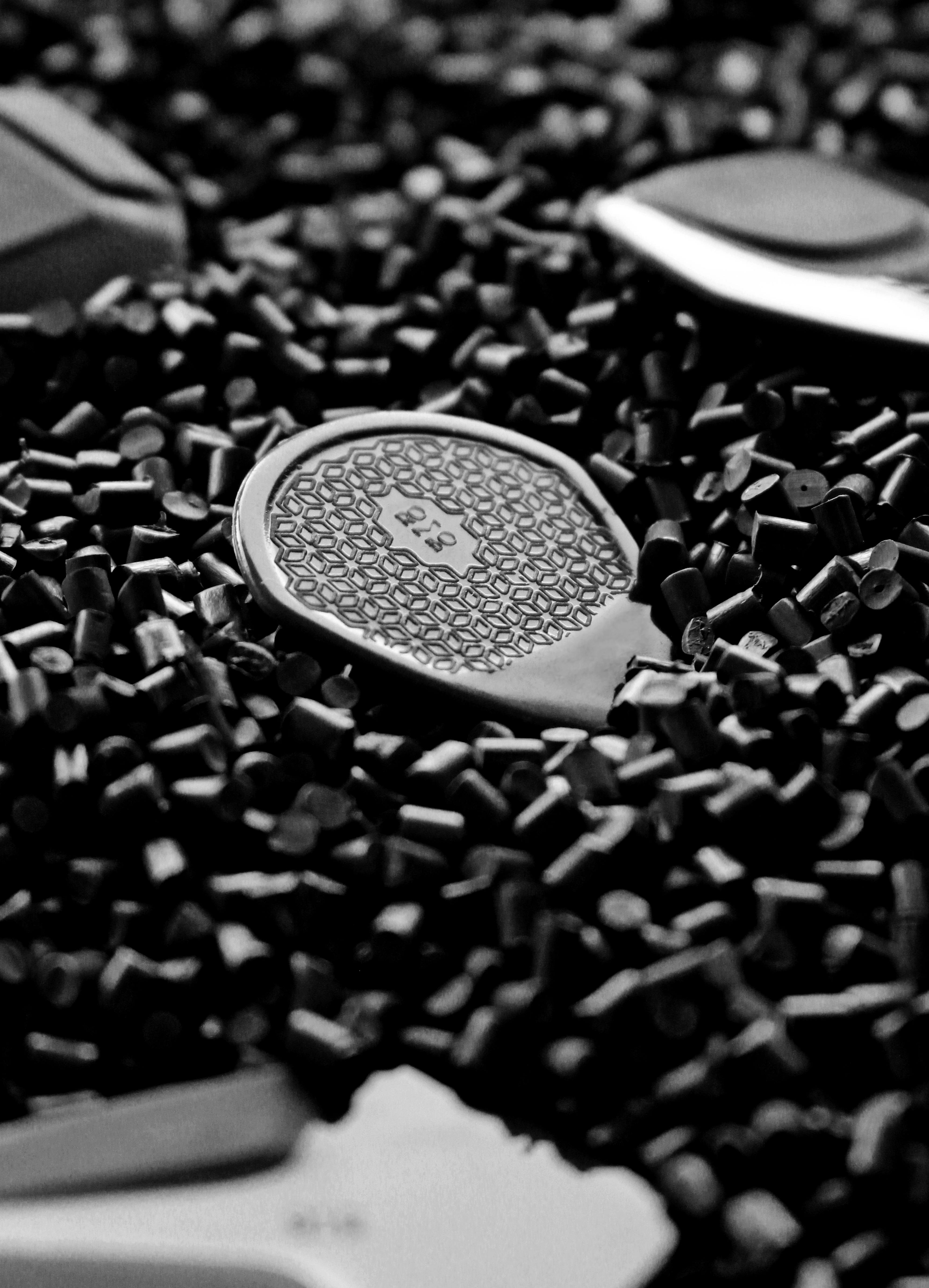
Bio-based means the polymer's carbon atoms physically originate from plants—PLA from corn sugar, PHA from bacterial fermentation, bio-PE from sugarcane ethanol. Bio-attributed (also known as mass balance) means certified bio-based feedstocks are fed into a cracker, and the offset credit is allocated to that batch; chemically, this resin is identical to petrochemical sources. For direct drop-in replacement in existing molds, bio-attributed is almost always the answer; physically bio-based materials like PLA have different thermal and impact behaviors, forcing mold and design changes.
| Grade | Type | Direct Drop-in? | Cost Relative to Virgin |
|---|---|---|---|
| PLA (Ingeo) | Bio-based | No | +20 – 40% |
| PHA (Bacterial) | Bio-based | No | +60 – 120% |
| Bio-PE (Sugarcane) | Bio-based | Yes | +10 – 20% |
| Bio-PP (ISCC+) | Bio-attributed | Yes | +15 – 30% |
| Bio-PET (Partial) | Bio-based | Yes | +8 – 15% |
| Bio-PA (Castor Oil) | Bio-based | Mostly | +25 – 50% |
| Recycled PP | Post-consumer | Mostly | -10 to +15% |
| Chemically Recycled PP | Chemical | Yes | +10 – 25% |
Mineral Fillers: Changing Price by Replacing Mass
20% talc-filled PP is cheaper per kg than unfilled PP because talc at about USD 0.40/kg replaces polymer at USD 1.40/kg. The problem is that talc increases density by about 10%, making the part heavier; the money saved per kg might be offset per part. Mineral fillers also increase stiffness, reduce impact, and change warp. They are suitable where "stiffness/dollar" is important and high density doesn't hurt weight-sensitive applications.
Trap: Quietly Drifting Recycled Content
Most processors reintroduce 10-25% in-house regrind (sprues, runners, purge material) as PIR. If controlled, this is free material and largely harmless. The trap is drift: as regrind accumulates, each melt cycle shortens molecular chains, increasing melt flow rate and decreasing impact strength. First-generation regrind is almost identical to virgin; fifth-generation regrind might have Izod impact 30-50% lower. Disciplining regrind ratios, purging procedures, and regular batch testing is necessary to keep this lever useful.
Alternative Feedstock Costs and Supply Chain Realities
Alternative feedstocks are no longer the niche category they were in 2018. PCR HDPE and PP are available in 25-ton batches with two-week lead times in the US, Europe, and increasingly China. Bio-attributed PP and PE from ISCC Plus-certified crackers are available with one-week lead times at a 5-10% premium over virgin. The supply chain risks that previously dominated alternative discussions—"can I actually get it? Will the color match last year's batch?"—are now solvable problems, not barriers. Still difficult is small-batch prototype supply. A 50 kg order of a special PCR grade might take 4 weeks and cost 3-5 times the mass production price per kg. In the prototype stage, try to align with mass production suppliers, or use approximate virgin material for the first mold trial, then switch to PCR once production volumes are confirmed.
Carbon Accounting: Numbers Appearing in Procurement Decisions
| Feedstock | kg CO2e per kg (Typical) | Relative to Virgin | Notes |
|---|---|---|---|
| Virgin PP | 1.7 – 2.1 | Baseline | ISO 14040 cradle-to-gate |
| Mechanical Recycled PCR PP | 0.6 – 1.0 | -50 to -65% | Depends on collection distance |
| Chemically Recycled PP | 1.2 – 1.6 | -20 to -30% | Depends on cracker energy |
| Bio-attributed PP | 0.9 – 1.4 | -25 to -50% | ISCC Plus allocation |
| Virgin ABS | 3.1 – 3.6 | Baseline | — |
| PCR ABS | 1.2 – 1.8 | -50 to -60% | Closed-loop collection |
| Virgin PC | 4.8 – 5.4 | Baseline | Bisphenol A route |
| PCR PC (Optical Disc Stream) | 1.9 – 2.6 | -50 to -55% | Mature feedstock |
These numbers directly impact Scope 3 disclosures under EU CSRD and factor into most global retail buyers' procurement scores. A 40% reduction in feedstock CO2e becomes a quantifiable line item in carbon reports and is increasingly a scoring input for procurement decisions—at some global retailers, a 10% improvement in supplier emissions can turn a project from "consideration" to "win."
Practical Cases
A Cosmetic Cap Project Transitioning to 100% PCR HDPE
A luxury cosmetic brand transitioned its 3.8 million annual bottle caps from virgin HDPE to 100% PCR HDPE, sourced from beach clean-up and retail closed-loop streams. Resin cost increased from USD 1.45/kg to USD 2.10/kg, a difference of USD 0.017 per piece. The mold required enlarging the gate from 1.2 mm to 1.6 mm and increasing mold temperature from 25 °C to 40 °C to handle the lower melt flow rate, costing USD 8,600 for mold preparation. The marketing value of gaining shelf access in a sustainably mandated market was in the six figures monthly.
Color variation forced a specific design change: the brand abandoned pure white SKUs, switching the entire line to an off-white, allowing PCR HDPE to hit the target with <4% pigment (higher would push the cost difference beyond acceptable limits). The cap top was given a matte texture to hide speckles under 0.3 mm. Key design action: the benefit of standardizing to a single off-white across the line was greater than mold adjustments. A single target color reduced SKUs from 14 to 5, simplified color matching for PCR suppliers, and increased first-pass yield from 86% to 97.4%. Sustainable compliance and operational efficiency aligned in one decision.
A Medical Diagnostic Cartridge with 20% Bio-attributed PP
A single-use diagnostic cartridge, originally made from virgin PP with an annual volume of 18 million pieces, was switched to 20% ISCC Plus bio-attributed PP, adding USD 0.04 per piece. Because bio-attributed PP is chemically identical to petrochemical PP, no mold changes, revalidation, or regulatory resubmission were needed—the supplier switch was merely a documentation process with a mass balance certificate. The product line's Scope 3 carbon disclosure decreased by approximately 7%.
A Small Appliance Casing Using 30% Mineral Filler to Control Costs
An ABS kitchen appliance casing saw resin costs increase by 40% between 2023 and 2025. Re-engineering it with 30% talc-filled PP (changing resin family; suitable due to a lenient maximum service temperature of 65 °C) allowed the casing unit cost to increase by only 3% relative to 2023, offsetting the virgin ABS price hike. The switch required mold changes: enlarging gates and adding 2° draft angle (talc-filled PP has higher viscosity, prone to dragging during ejection), costing USD 11,500 for mold modification, which paid back in 17 days based on the new resin price difference.
Do / Don't
| Do | Don't |
|---|---|
| Benchmark retail packaging at 25 – 35% PCR | Assume virgin material will remain compliant by 2027 |
| Choose bio-attributed for direct drop-in replacement | Force PLA into molds designed for ABS |
| Specify PCR grade with sorted source description | Order "PCR" without specifying feedstock source |
| Re-validate impact for fifth-generation regrind | Assume regrind ratio drift has no impact |
| Budget for mold modification when switching to PCR | Insist on retaining original gates and mold temperature |
| Align color difference tolerance with PCR realities | Demand ΔE < 1.5 for market PCR |
Common Mistakes
| Mistake | Why it Fails | How to Avoid |
|---|---|---|
| Assuming PCR is a direct virgin replacement | Lower MFR, color variation, short shots | Budget USD 2 – 12k for mold modifications |
| Using PLA for parts with even slight heat exposure | Uncrystallized PLA softens above 55 °C | Reserve PLA for single-use cold applications |
| Bio-attributed without certification | Claims unprovable, channel audit failures | Require ISCC Plus or equivalent chain of custody |
| Color difference targets tighter than PCR capabilities | Explosion of rejection rates | Relax ΔE or switch to matte texture |
| No quality control for regrind loops | 5th generation impact fails to meet specs | Limit number of regrind generations; quarterly batch testing |
| Mineral fillers judged only by per-kg cost | Increased density offsets material savings | Evaluate by per-part cost, not per-kg sticker price |
Process-Side Adjustments Needed for Most PCR Conversions
A mold that has been running virgin ABS for eight years will not smoothly accept 30% PCR grades without adjustment. Practical adjustment checklist: increase mold temperature by 10-15 °C to compensate for lower melt flow rate; enlarge gates by 0.2-0.4 mm; extend drying time from 2 hours to 3-4 hours (PCR pellets often carry residual moisture from reprocessing); extend cooling time by 8-15% to counteract higher residual stress in PCR. Skipping any of these will lead to the three symptoms seen in every PCR trial run: short shots in thin sections, surface speckling, and batch-to-batch dimensional drift.
Regulatory Map: When It Bites
| Regulation | Region | Effective | What it Requires |
|---|---|---|---|
| EU PPWR | EU | 2026 – 2030 | 10 – 35% PCR depending on packaging type |
| California SB 54 | California | 2028 | 30% PCR for rigid plastics; rising to 65% by 2032 |
| Washington E-waste | WA | 2025 | Electronic casings to contain PCR |
| UK Plastic Packaging Tax | UK | From 2022 | £210/ton tax for <30% PCR |
| Japan Plastic Resource Circulation Act | Japan | From 2022 | Disclosure of recyclable design |
| EU CSRD Scope 3 | EU | From 2024 | Supply chain carbon disclosure |
| US FDA LNO (rPET) | US | Ongoing | FDA review required for food-contact PCR |
Pre-project Checklist
- Evaluate PCR, bio-based, or filled alternatives at the concept stage, not as a late-stage replacement
- Select PCR source with sorted stream specifications in the contract
- Bio-attributed grades include ISCC Plus or equivalent mass balance certification
- Budget USD 2 – 12k for mold modifications for PCR/filled alternatives
- Color difference targets are compatible with the chosen PCR source
- Regrind policy limits the number of thermal cycles materials can undergo
- Regulatory map checked for the product's intended sales markets
- In-situ performance testing plan includes alternative feedstocks, not just virgin
Design Takeaways
Alternative feedstocks have become a hard BOM constraint faster than most design teams realize. The right response isn't to wait until regulations are at the door—it's to keep "alternative evaluation" alive in every project; treat PCR as a decision requiring mold modifications, not a direct drop-in; prioritize bio-attributed for existing molds, then bio-based; decide on mineral fillers based on per-part cost, not per-kg sticker price. Brands that will lose contracts in 2027 are those whose BOMs are still stuck in the 2019 virgin material world; those that maintain shelf space are the ones who spent USD 10,000 on a mold modification last year and moved forward.


0 comments