
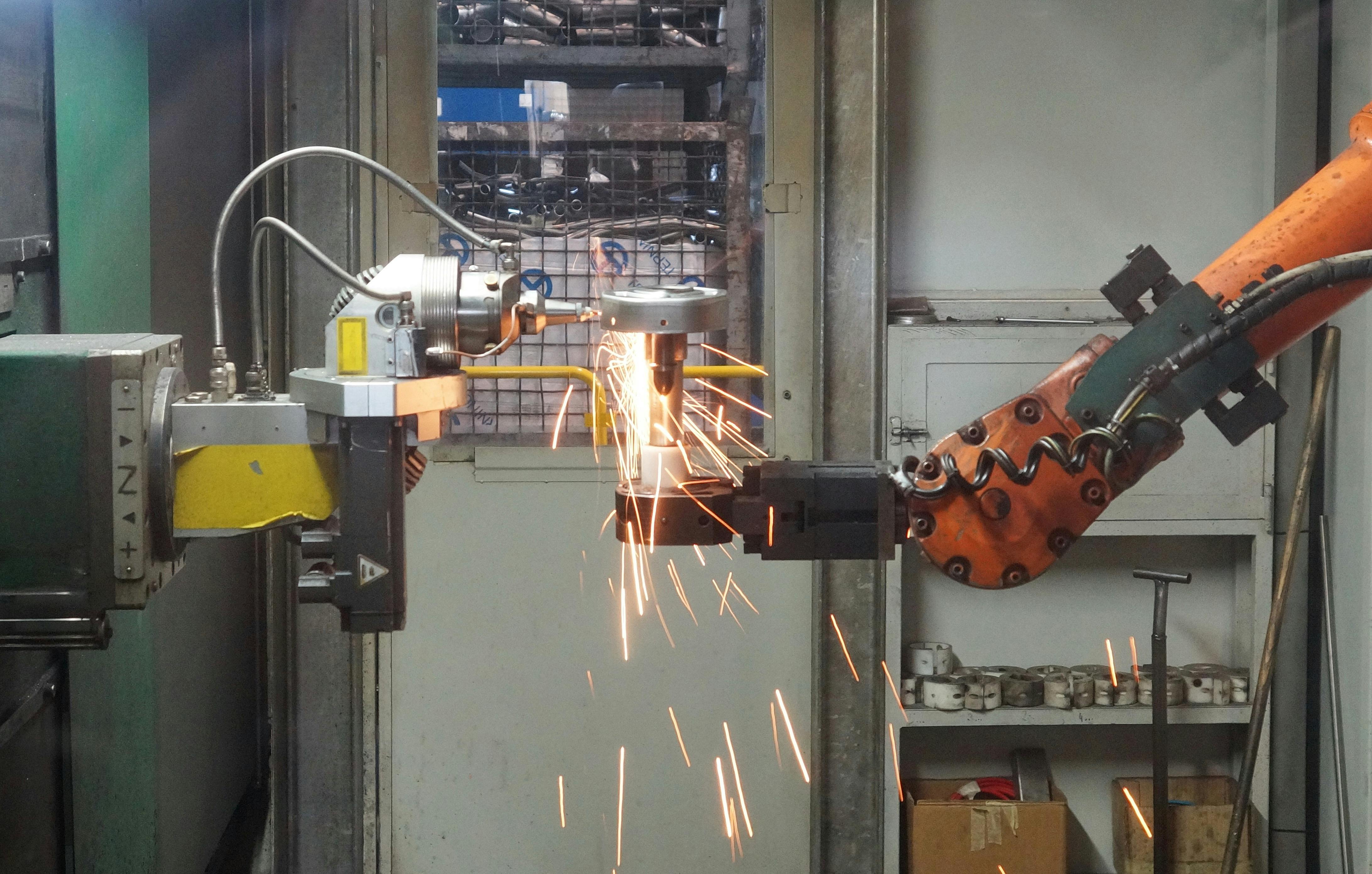
By 2026, metal additive manufacturing is no longer the laboratory curiosity it was in 2018. The true cost of printing a 17-4 PH bracket on a 400 W laser LPBF machine, including powder, machine depreciation, inert gas, and support removal, now falls between USD 1.80–3.40 per cubic centimeter. A Ti-6Al-4V implant blank, which used to take six weeks for outsourced machining, can now be shipped in eleven days. The technology has moved beyond the proof-of-concept stage; the remaining questions are about alloy selection, post-processing, and which parts truly justify moving from a milling machine to a laser.
This article reviews the families of alloys actually available today: what each excels at, where problems might arise, and what post-processing steps are needed after selection. Unless otherwise specified, all figures are based on LPBF—binder jetting and DED have their own cost ranges, which will be listed in the comparison table later.
The Landscape of Processes Under the "Metal 3D Printing" Label
There are four distinct physics under "metal 3D printing." Laser Powder Bed Fusion (LPBF / DMLS / SLM) is the workhorse for fully dense, fine-featured parts. Electron Beam Melting (EBM) operates under vacuum, making it the preferred choice for reactive titanium and nickel alloys, offering lower residual stress at the cost of a rougher surface finish. Binder jetting prints green parts that are then sintered to 97–99.5% density, trading peak mechanical properties for 3–5 times higher throughput. Directed Energy Deposition (DED) is not for fine features, primarily used for large aerospace structures and repair welding. The choice of physics already narrows down the alloy list—before even consulting a datasheet.
| Process | Density | Typical Ra | Strengths | Relative Unit Cost |
|---|---|---|---|---|
| LPBF / DMLS | 99.5–99.9% | 6–12 µm | Small, fine, dense parts | 1.0× (Baseline) |
| EBM | 99.5%+ | 25–40 µm | Titanium, Inconel, stress-sensitive parts | 1.2–1.6× |
| Binder Jetting + Sintering | 97–99.5% | 10–18 µm | Mid-volume stainless steel, tools | 0.35–0.6× |
| DED | 99%+ | 40–100 µm | Large parts, repair, cladding | 0.6–0.9× (per kg) |
| Cold Spray / WAAM | Varies | Rough | Near-net-shape large structures | 0.4–0.7× (per kg) |
Stainless Steels: The Starting Point for Most Projects
17-4 PH is the first metal most people print. After H900 aging, it achieves tensile strength of 1,170 MPa and yield strength of 1,070 MPa, sufficient for most structural brackets. Powder costs USD 80–120/kg, machine validation is widespread, and heat treatment is well-understood. Weaknesses include hydrogen absorption during printing (resolvable with stress relief heat treatment) and slightly lower elongation than wrought parts—typically in the 10–14% range, rather than 16–18%.
316L is the default choice for corrosion resistance and biocompatibility. It's austenitic, non-magnetic, and resistant to chloride environments, making it suitable for food and surgical instruments. As-printed, it's softer than wrought parts—with tensile strength around 550 MPa and elongation of 45–55%—which can be an advantage for applications requiring formability. If parts will contact seawater, saline, or CIP cleaning chemicals, 316L is a clear choice over 17-4.
Titanium Alloys: The Reference Material for Aerospace and Medical
Ti-6Al-4V Grade 5 is the classic aerospace bracket material—with tensile strength of 950 MPa, density of 4.43 g/cm³, corrosion resistance, and biocompatibility. Grade 23 (ELI) reduces oxygen and iron impurities for medical implant use. Both can be printed to full density in LPBF's argon environment or EBM's vacuum. The primary process risk is oxygen contamination—improper powder storage, chamber leaks, or insufficient vacuum can rapidly degrade ductility. Powder costs USD 350–550/kg, making it one of the most expensive common metals, typically chosen only when other materials' performance is insufficient.
Aluminum Alloys: Lightweight Structures and Heat Transfer
AlSi10Mg is the workhorse for printing aluminum. In the T6 condition, it has a tensile strength of 330 MPa and yield strength of 240 MPa—yield strength is slightly lower than 6061-T6 wrought (310/275), but as-printed, its thermal conductivity is about 130 W/m·K. It's suitable for heat sinks, manifolds, and lightweight brackets where geometric freedom is more important than peak mechanical performance. The pitfall is fatigue: the fatigue life of printed AlSi10Mg is about 60–70% of wrought 6061, so designs should avoid stress concentrations and carefully plan load paths. When wrought-level mechanical properties are needed along with additive freedom, Scalmalloy and A20X are premium options.
Nickel-Based Superalloys: When Temperature Is the Specification Itself
Inconel 625 can withstand continuous temperatures up to 980 °C, offering good weldability and corrosion resistance—a top choice for exhaust components, heat exchangers, and chemical processing parts. Inconel 718 sacrifices a bit of the high-temperature limit for precipitation-hardenable strength (1,240 MPa tensile after aging), dominating turbine structures below 700 °C. Both require careful parameter tuning to avoid cracking from large cross-section residual stress; both also benefit from HIP followed by standard solution + aging treatment. Powder price is about USD 180–260/kg; due to high enthalpy of fusion, build time is 30–50% slower than stainless steel.
Tool Steels and Cobalt-Chrome Alloys: Specialized Options
Maraging steel (MS1 / 18Ni300) is easy to print, achieving HRC 50–54 after aging with minimal dimensional change—a classic choice for conformal cooling injection mold inserts. H13 is the reference hot work steel, used in die-casting inserts and hot forging tools, reaching HRC 52 after quench and temper. CoCrMo (cobalt-chrome alloy) reaches HRC 40–45, with strong wear resistance and biocompatibility, dominating dental frameworks, orthopedic joints, and high-wear industrial parts. These are not general-purpose materials—they are chosen only when a specific property (hardness, conformal cooling, wear resistance, biocompatibility) is paramount.
Copper Alloys: New Stars for Heat and Electricity
With the widespread adoption of green (515 nm) and blue laser systems over the past three years, pure copper and CuCrZr have transitioned from being "too reflective to print" to being printable. Aged CuCrZr achieves a tensile strength of 320 MPa, maintaining approximately 80% IACS electrical conductivity—suitable for induction coils, motor stators, and rocket engine heat exchangers. Powder costs USD 150–220/kg, and machine time is higher than stainless steel, as these systems are still specialized.

Alloy Cost and Performance Matrix
The following figures represent typical performance for each alloy after standard LPBF heat treatment; powder prices are distributor quotes for 10–25 kg batches in 2026. These are for initial comparison and not suitable for certification.
| Alloy | Tensile (MPa) | Density (g/cm³) | Powder USD/kg | Common Post-Treatment |
|---|---|---|---|---|
| 17-4 PH (H900) | 1,170 | 7.80 | 80–120 | Solution + H900 Aging |
| 316L | 550 | 7.99 | 70–110 | Solution Anneal |
| Ti-6Al-4V Grade 23 | 1,020 | 4.43 | 350–550 | HIP + Stress Relief |
| AlSi10Mg (T6) | 330 | 2.68 | 55–90 | T6 Heat Treatment |
| Inconel 718 (Aged) | 1,240 | 8.22 | 180–260 | HIP + Aging |
| MS1 Maraging (Aged) | 1,900 | 8.10 | 110–150 | Solution + Aging |
| CuCrZr (Aged) | 320 | 8.89 | 150–220 | Solution + Aging |
Which Alloy for Which Application
| Application | Preferred | Secondary | Avoid |
|---|---|---|---|
| General Structural Brackets | 17-4 PH | AlSi10Mg | Ti-6Al-4V (Overkill) |
| Seawater / Chlorine Environment | 316L | Ti-6Al-4V | 17-4 PH |
| Lightweight Heat Dissipation | AlSi10Mg | CuCrZr | 316L |
| High Temp Exhaust / 700 °C+ | Inconel 718 | Inconel 625 | Aluminum Alloys |
| Medical Implants | Ti-6Al-4V Grade 23 | CoCrMo | 17-4 PH |
| Conformal Cooling Inserts | MS1 Maraging | H13 | AlSi10Mg |
| Induction Coils / Motors | CuCrZr | Pure Copper | Stainless Steel |
Post-Processing Is Not Optional
Printed metal parts are almost never put into service directly. The standard process involves: stress relief on the build plate (to survive support removal), wire EDM or band saw cut-off, support removal, heat treatment to final condition, HIP for fatigue-critical parts, machining for mating surfaces and threads, and finally finishing (sandblasting, electropolishing, anodizing, coating). This entire chain can account for 30–60% of the total unit cost—a quote that only includes printing is incomplete.
Three Metal Additive Manufacturing Projects from the Last Twelve Months
A Conformal Cooling Insert that Reduced Cycle Time by 32%
A PC/ABS automotive interior part previously ran on a traditional water channel insert with a 48-second cycle. Hot spots on two boss features led to occasional short shots. The team redesigned the insert using MS1 Maraging steel, creating a conformal cooling channel network 3 mm from the surface, following the boss contours. The printed insert cost USD 4,200 (compared to USD 1,800 for a traditional milled insert), but the cycle time was reduced to 32.5 seconds, and the short shot rate dropped from 2.1% to 0.3%.
Key design action: Placing cooling channels at hot spots, rather than where traditional drills could reach. The conformal cooling system removed an additional 180 W of heat from the boss area per cycle, which was the reason for the reduced cycle time. The tooling premium paid for itself after 14,000 cycles—approximately six weeks of production time.
A Titanium Alloy Spinal Fusion Device with an Osteointegration Lattice
A Ti-6Al-4V Grade 23 spinal fusion device required a 70% porous lattice on its top and bottom surfaces to promote bone ingrowth, while retaining solid side walls to withstand compressive loads. LPBF achieved 400 µm strut specifications within ±30 µm, producing 180 parts per build plate at a unit cost of USD 340 (including HIP and passivation), with surface morphology passing 510(k). Build time was 28 hours, with six days for post-processing including cleaning, HIP, heat treatment, and electropolishing.
A One-Piece Printed Inconel 625 Rocket Injector
A dual-propellant injector, originally composed of 47 machined and brazed components, was redesigned as a one-piece Inconel 625 print, with a build time of 92 hours. Internal flow paths 0.8 mm wide with 0.4 mm wall thickness were geometrically impossible with traditional manufacturing. Unit cost decreased from USD 42,000 (assembled part) to USD 8,600 (printed + HIP + CT inspection), and the leak rate under 21 MPa pressure testing improved from 3 out of 10 parts to 0 out of 12 parts.
"Dos" and "Don'ts" When Specifying Metal Printing
| Do | Don't |
|---|---|
| Specify alloy AND heat treatment condition on the drawing | Just write "17-4 PH" without specifying H900/H1025 |
| Always budget for HIP for cyclically loaded parts | Directly use as-printed fatigue data |
| Minimum wall thickness 1 mm, 3 mm if space allows | Require 0.4 mm thin walls on a 200 mm tall part |
| Orient critical features along X/Y | Orient load-bearing features along Z |
| Ask the factory for a separate quote for support removal labor | Accept a single lumped sum for machine cost |
| Plan for post-machining of mating surfaces | Expect ±0.05 mm tolerance straight out of the machine |
Common Metal Additive Manufacturing Mistakes
| Mistake | Why it Fails | How to Avoid |
|---|---|---|
| Skipping stress relief | Deformation during support removal | Stress relieve on the build plate first |
| Ignoring build orientation | Fatigue life anisotropy up to 2× | Orient load paths along X/Y |
| Treating as-printed Ra as final | 6–12 µm Ra is insufficient for sealing surfaces | Post-machine or sandblast + polish |
| Using 17-4 in saltwater environments | Chloride pitting corrosion | Switch to 316L or titanium alloy |
| Ignoring powder traceability | Certification failure | Trace entire batch from powder to part |
| Designing closed cavities that trap powder | Increased internal residual powder, CT scan failure | Add 4 mm powder drainage holes |

Pre-Print Checklist
Review this checklist before submitting your build file. If any question remains unanswered, the next step is to talk to the service bureau, not to submit it and hope for the best.
- Alloy and heat treatment condition are both specified on the drawing.
- Build orientation is clearly marked, with load paths primarily in the X/Y plane.
- Support strategy (self-supporting angles) has been confirmed with the service bureau.
- Minimum wall thickness is 1 mm or more; thin fins are carefully planned for orientation.
- Any internal cavities that could trap powder have 4 mm or larger drainage holes.
- Post-processing chain (stress relief, HIP, heat treatment, machining) is defined.
- Inspection plan: CT, dye penetrant, surface Ra witness samples.
- Powder batch number is recorded for traceability.
Design Considerations
The premium of metal additive manufacturing is worthwhile when geometry brings true system benefits—conformal cooling, lattice infill, part consolidation, integrated flow channels. Choose alloys based on service conditions, clearly specify heat treatment states, budget for HIP and post-machining, and include build orientation on the drawing rather than leaving it to the shop floor. By doing these four things well, the part that lands on your desk will be the one you designed, and its performance will match your analytical assumptions.


0 comments